Mold Assessments & Mold Testing in Northwest Florida
Concerned About Mold or Moisture in Your Home?
Visible mold, musty odors, unexplained moisture, high indoor humidity, previous water damage, or HVAC condensation can all be signs that a property needs further evaluation.
J. Gregory Home Inspections provides professional mold assessments, mold testing, moisture evaluations, remediation protocols, and post-remediation verification throughout Pensacola, Navarre, Gulf Breeze, Destin, Fort Walton Beach, Pace, Milton, Crestview, Niceville, Miramar Beach, Cantonment, and surrounding Northwest Florida communities.
Mold assessments are performed by Josh Gregory, Florida Licensed Mold Assessor MRSA5499, with more than 17 years of construction experience and over 3,000 property inspections completed.
Our goal is not simply to collect air samples. We evaluate the property, investigate moisture conditions, document suspected mold growth, determine the areas that may be affected, and provide clear recommendations based on what is actually found.
Call or Text 850-904-6955
When Should You Consider a Mold Assessment?
A mold assessment may be appropriate if you notice or have experienced:
Visible or suspected mold growth
Musty or earthy odors
Previous roof leaks
Plumbing leaks
Water intrusion
HVAC condensation problems
High indoor humidity
Water-damaged drywall or building materials
Condensation around air-conditioning registers
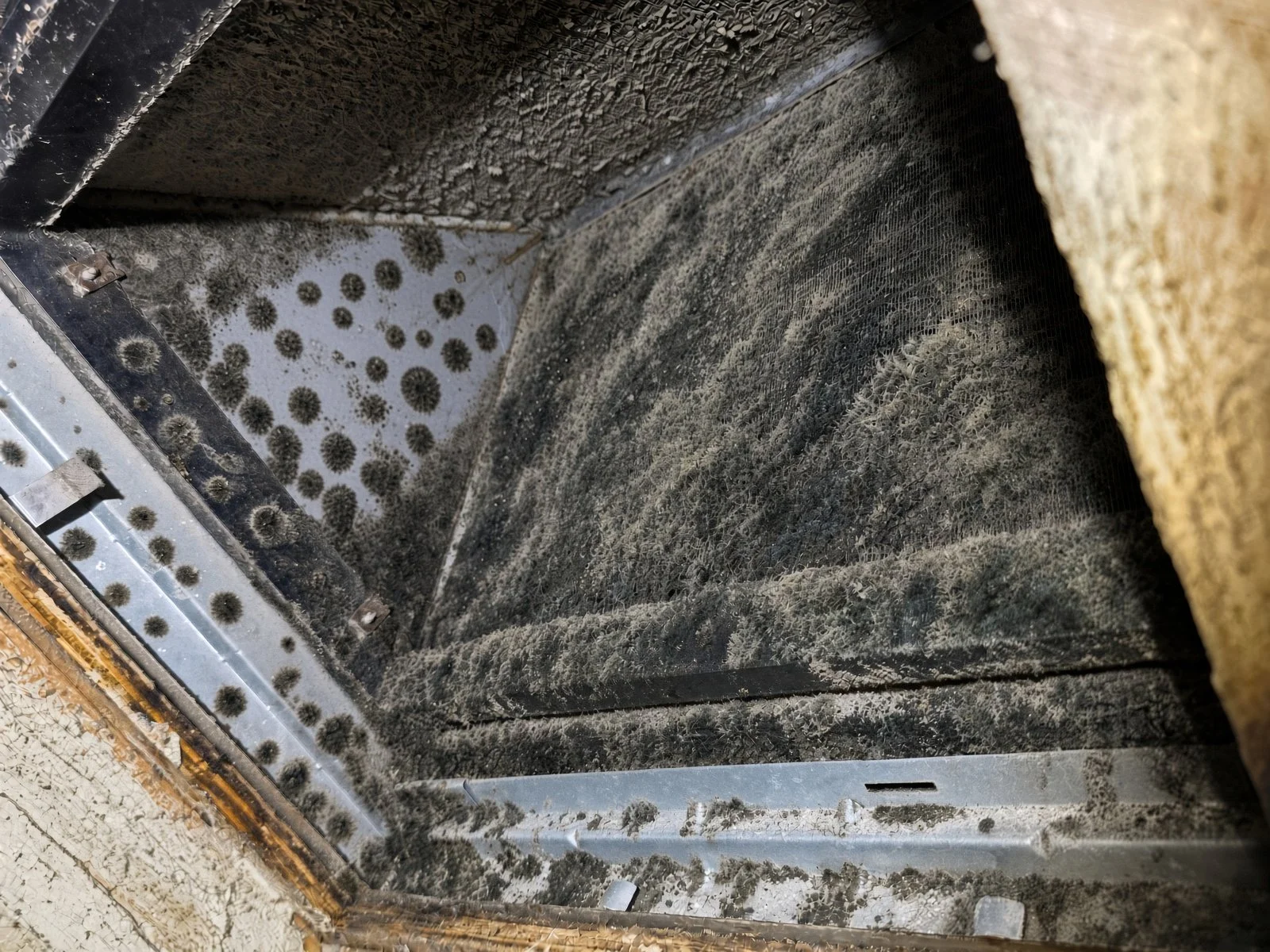
Mold-like growth inside or around an air handler
Recent flooding or water damage
Unexplained staining or deterioration
Concerns discovered during a home inspection
Mold concerns before purchasing a property
You do not necessarily need to see mold for a moisture problem to exist.
Likewise, the presence of a small localized area of suspected mold does not automatically mean the entire home requires remediation.
The purpose of the assessment is to gather enough information to understand what is occurring, where it is occurring, the likely moisture source, and what should happen next.
For a closer look at why a mold assessment may be important, read our article about the importance of mold assessments in Pensacola and Northwest Florida.
What Is a Professional Mold Assessment?
A mold assessment is more than simply taking an air sample.
A proper evaluation considers the history of the property, visible conditions, moisture sources, humidity, building materials, HVAC systems, and laboratory results when sampling is performed.
Florida regulates professional mold assessment services. State law defines mold assessment as a process involving physical sampling and detailed evaluation of information obtained from the building history and inspection when evaluating mold amplification greater than 10 square feet.
At J. Gregory Home Inspections, the assessment may include:
Property and moisture-history review
Visual evaluation of accessible areas
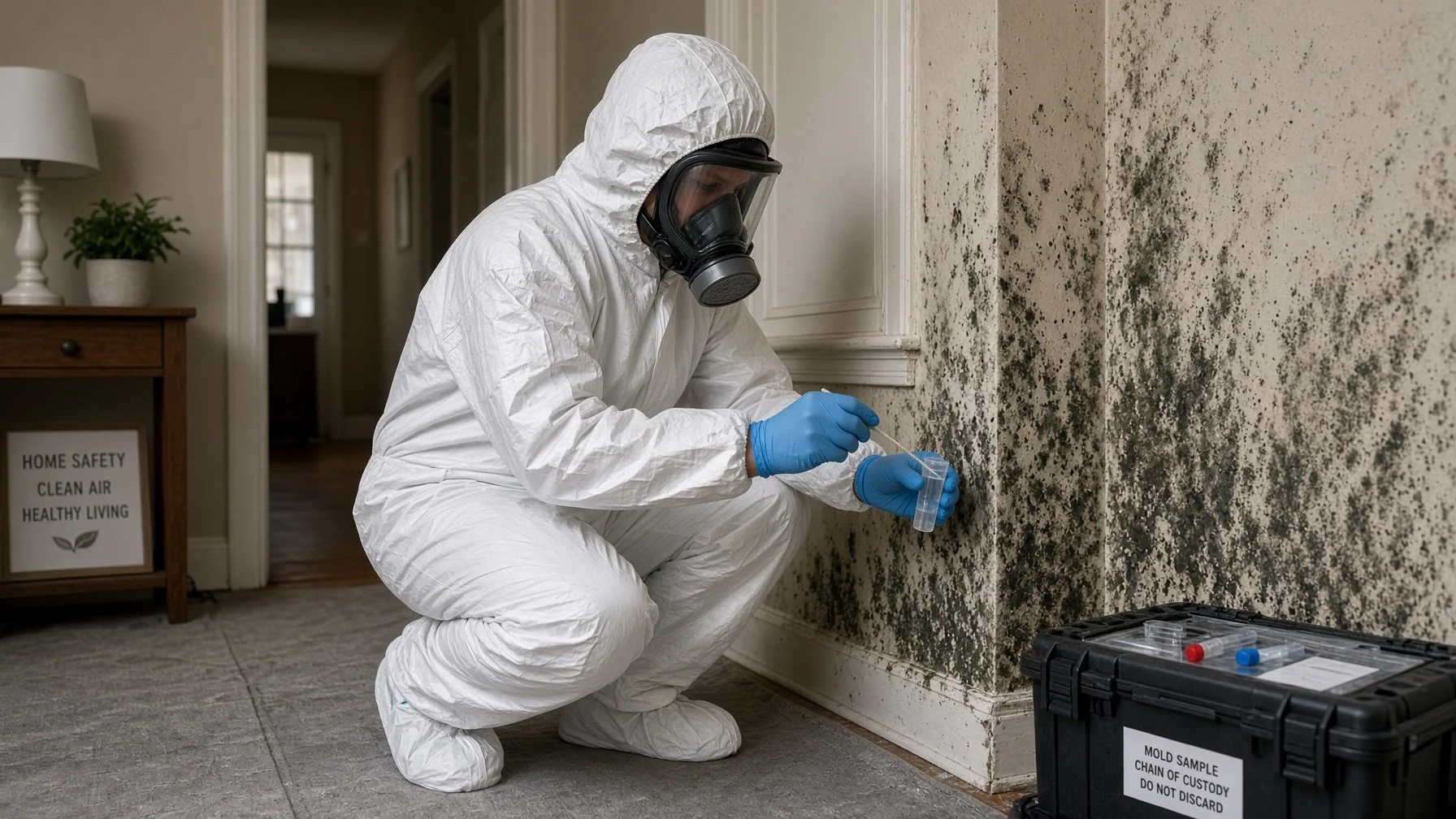
Evaluation of suspected mold growth
Moisture measurements
Indoor relative-humidity measurements
Infrared thermal imaging when appropriate
Inspection of accessible HVAC components
Attic and crawlspace evaluation when applicable
Borescope evaluation of certain concealed areas when appropriate
Air sampling
Surface sampling
Laboratory analysis
Identification of conditions contributing to moisture
Written findings and recommendations
The scope of each assessment depends on the conditions present at the property.
If you’d like a more detailed explanation of how professional mold assessments are performed, read our guide to the mold assessment process in Northwest Florida.
What Is a Professional Mold Assessment?
Our Mold Assessment Process
1. Discuss the Property History
We begin by discussing your concerns and any relevant history involving the property.
This may include:
Previous leaks
Roof repairs
Plumbing failures
HVAC problems
Flooding
High humidity
Previous remediation
Known areas of mold growth
Musty odors
Recent renovations
Understanding the history of the property helps guide the assessment.
2. Visual Mold and Moisture Evaluation
We evaluate accessible areas for visible conditions that may indicate moisture intrusion or microbial growth.
Depending on the property, this may include areas such as:
Interior walls and ceilings
Bathrooms
Kitchens
Laundry rooms
Attics
Crawlspaces
Closets
HVAC equipment
Air return cabinets
Supply plenums
Accessible duct components
Windows and exterior walls
Areas around plumbing fixtures
We also look for conditions that may be contributing to the problem rather than focusing only on visible growth.
3. Moisture and Humidity Evaluation
Mold growth generally requires moisture.
Finding and correcting the moisture source is therefore one of the most important parts of a mold assessment.
Depending on conditions, we may use:
Moisture meters to evaluate building materials for elevated moisture.
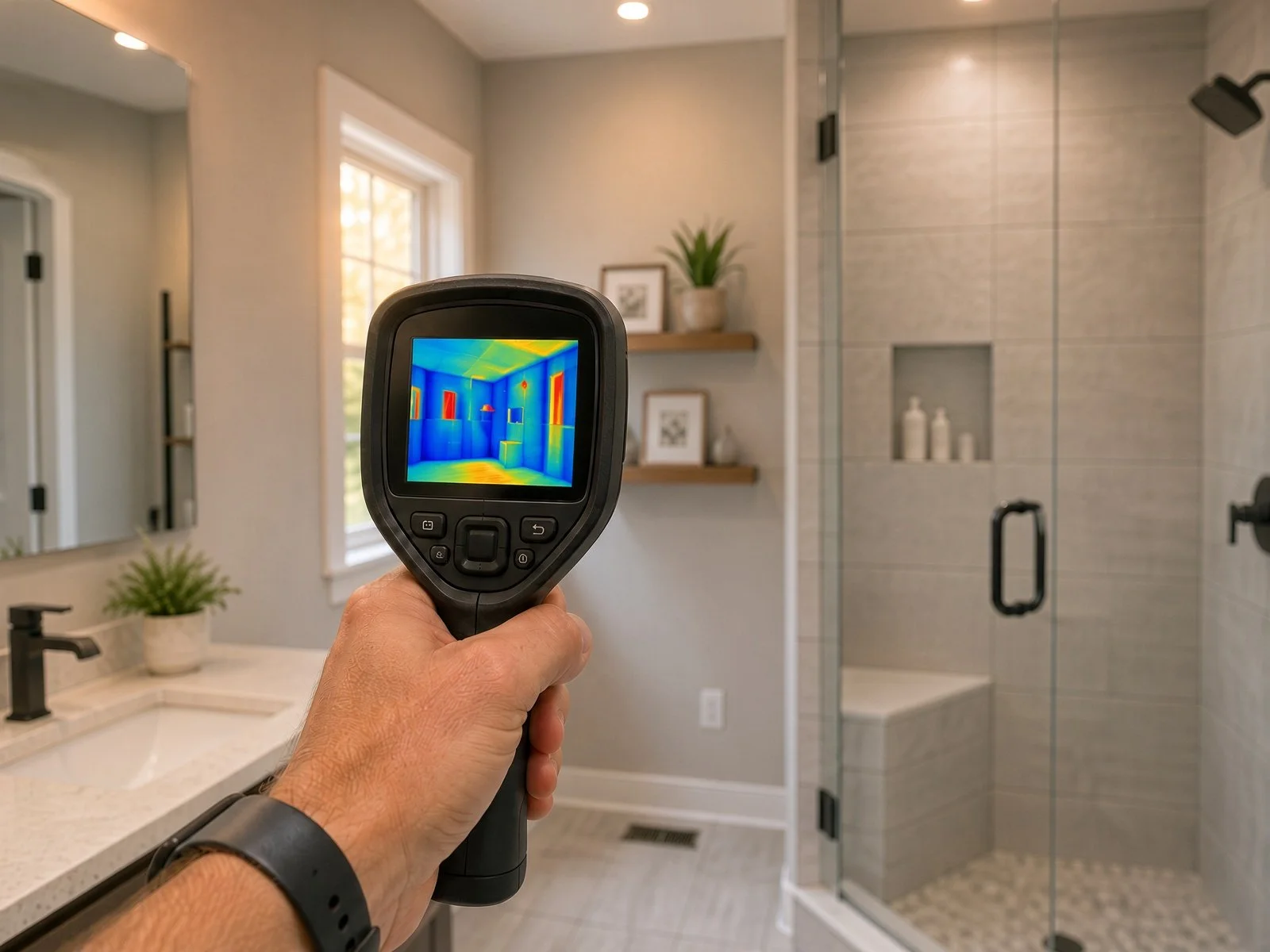
Infrared thermal imaging to identify temperature patterns that may indicate areas requiring further investigation.
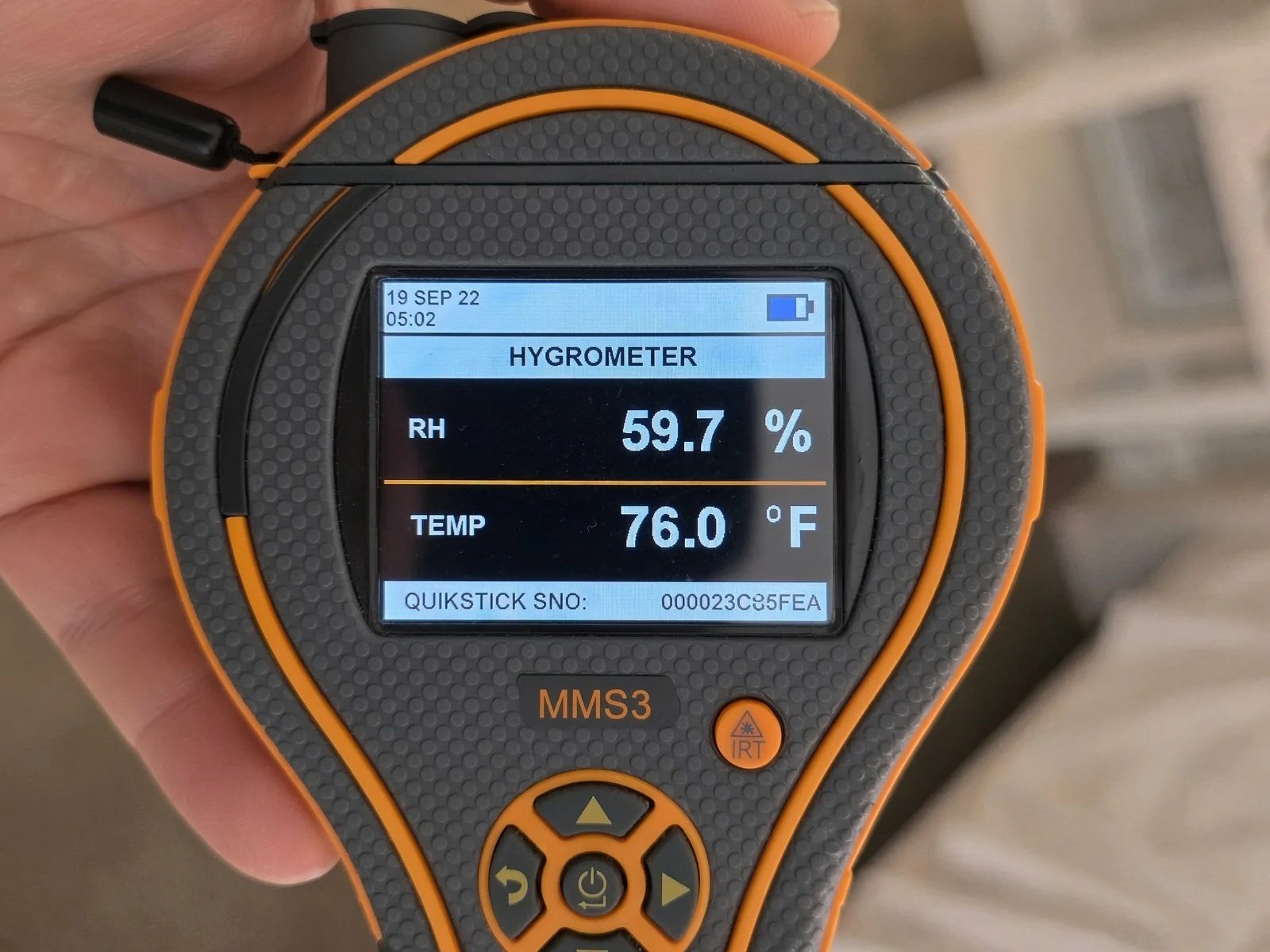
Hygrometers to measure indoor relative humidity and temperature.
Borescope cameras when appropriate to visually evaluate certain otherwise inaccessible areas through existing openings or limited access points.
These tools do not independently prove that mold is present. They help identify conditions or locations that deserve additional evaluation.
Mold Air Testing
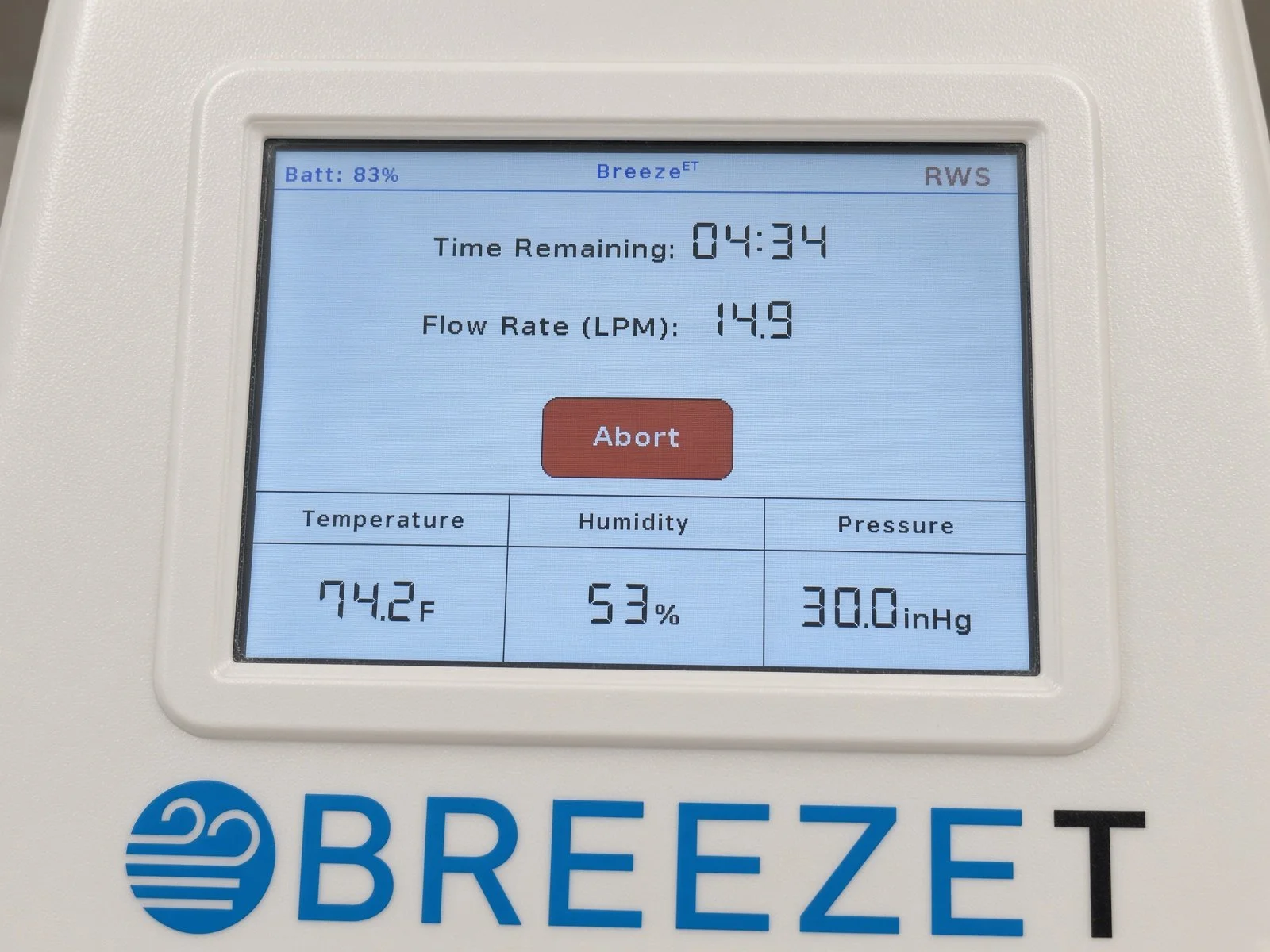
Air sampling can provide useful information about airborne fungal spores present at the time of testing.
Indoor samples may be compared with an exterior reference sample and with samples collected from other areas of the building.
Laboratory analysis can provide information including:
Fungal types or groups detected
Approximate airborne spore concentrations
Differences between indoor and outdoor samples
Differences between various areas of the property
Air sampling is one part of the overall assessment and should be interpreted along with the property history, visual observations, moisture conditions, and other findings.
A laboratory result by itself does not identify the moisture source or determine the full extent of a building-related problem.
Mold Air Testing
Surface Mold Sampling
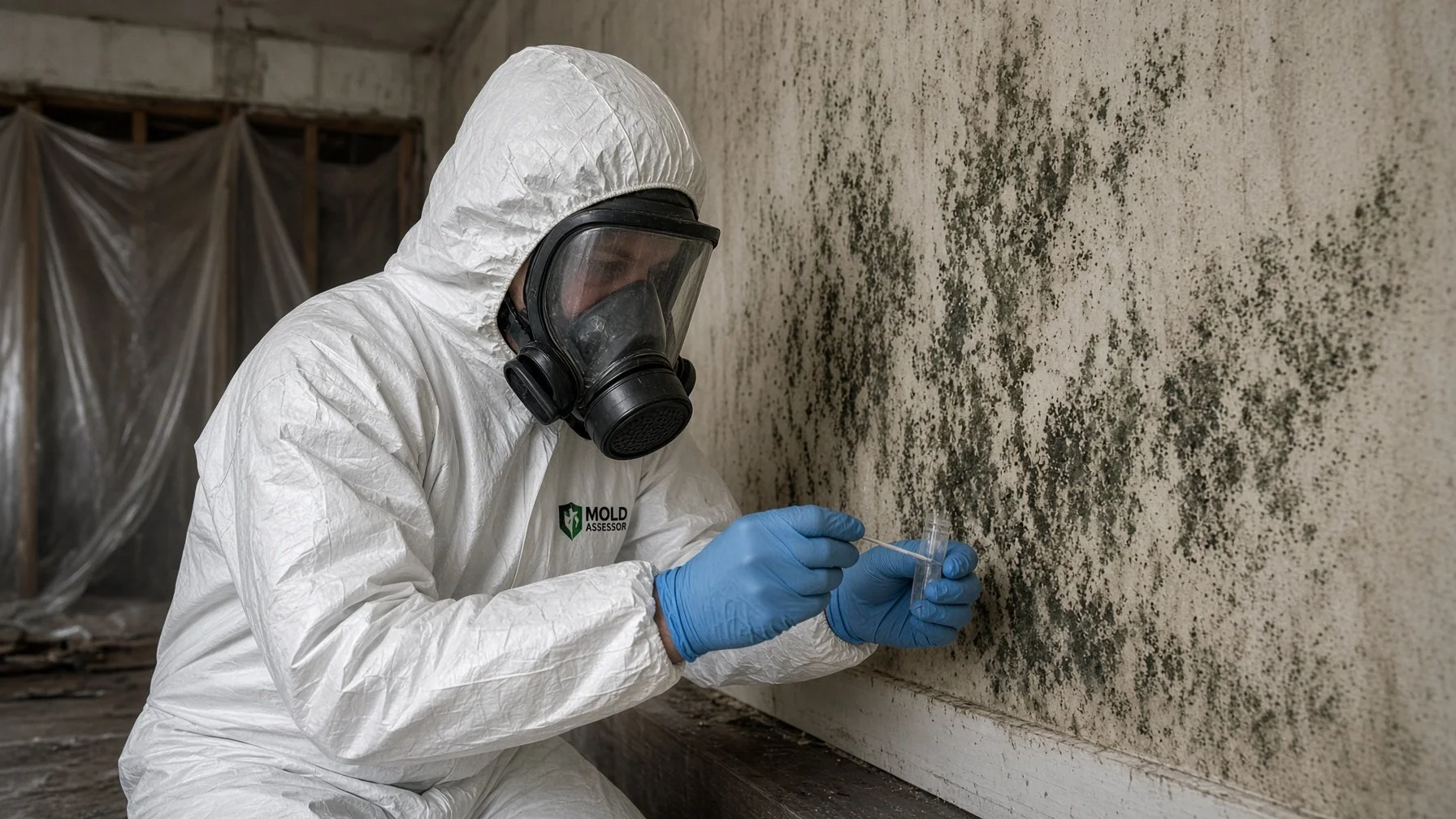
When visible or suspected microbial growth is present, a surface sample may be collected when appropriate.
Surface sampling can help determine whether fungal structures are present on a specific material and can assist in identifying the types of fungi observed by the laboratory.
Common sampling methods may include:
Swab samples
Tape-lift samples
Other appropriate surface collection methods
Sampling locations are selected based on conditions observed during the assessment rather than randomly testing every surface in the home.
Mold Testing vs. Mold Assessment: What's the Difference?
These terms are often used interchangeably, but they are not exactly the same.
Mold Testing
Mold testing generally refers to collecting air or surface samples and submitting them to a laboratory for analysis.
Mold Assessment
A mold assessment evaluates the property as a whole.
It considers:
Where moisture is coming from
Where suspected mold growth is located
How much area may be affected
What building materials are involved
Indoor humidity conditions
HVAC-related conditions
Laboratory results
What corrective action may be appropriate
Testing tells us what was captured in a particular sample.
The assessment provides the context needed to interpret those results.
For that reason, we do not approach mold investigations as simply “testing the air.”
Common Mold and Moisture Problems in Northwest Florida Homes
Northwest Florida's warm, humid climate creates unique moisture-management challenges.
During mold assessments, we commonly evaluate conditions involving:
HVAC Condensation
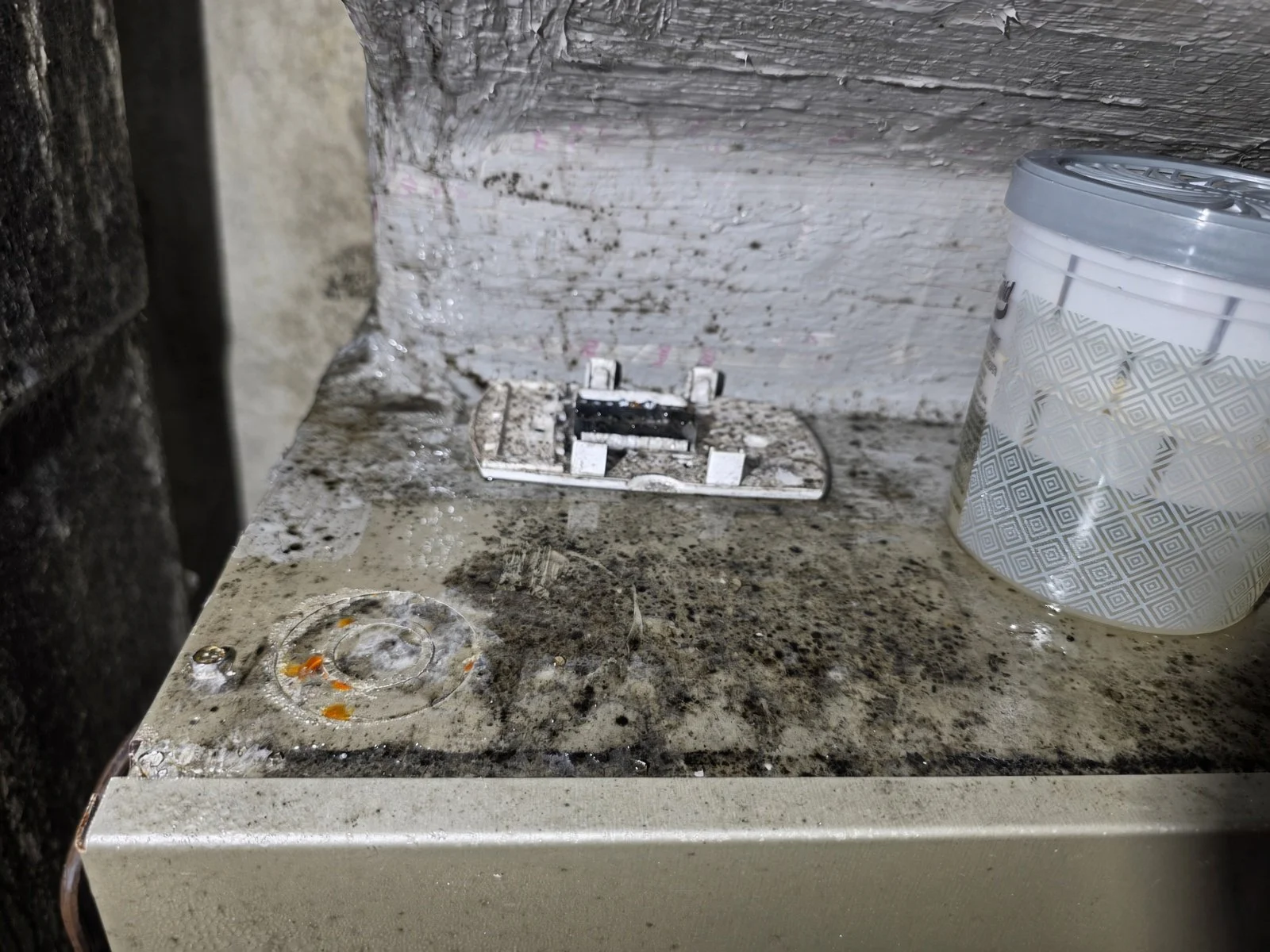
Air handlers, refrigerant lines, supply plenums, ductwork, and supply registers can develop condensation when insulation, airflow, temperature, humidity, or installation conditions are not properly controlled.
High Indoor Humidity
Indoor humidity that remains elevated can contribute to condensation and create conditions favorable for microbial growth.
Roof Leaks
Even relatively small roof leaks can wet insulation, roof decking, ceiling drywall, and other materials.
Plumbing Leaks
Leaks beneath sinks, behind fixtures, around water heaters, and within walls can sometimes remain unnoticed until staining, odors, deterioration, or mold growth develops.
Attic Moisture
Roof leaks, HVAC condensation, air leakage, ventilation conditions, and elevated humidity can contribute to attic moisture problems.
Window and Exterior Wall Leaks
Wind-driven rain can enter around improperly flashed or deteriorated windows, doors, siding transitions, and exterior penetrations.
Crawlspace Moisture
Homes with crawlspaces may experience elevated humidity, ground moisture, plumbing leakage, poor ventilation, or other moisture-related conditions.
Coastal communities can present additional challenges because of persistent humidity, salt-air exposure, and heavy HVAC use. For more examples, see our article on common moisture problems in Destin and Miramar Beach homes.
Mold in HVAC Systems and Air Ducts
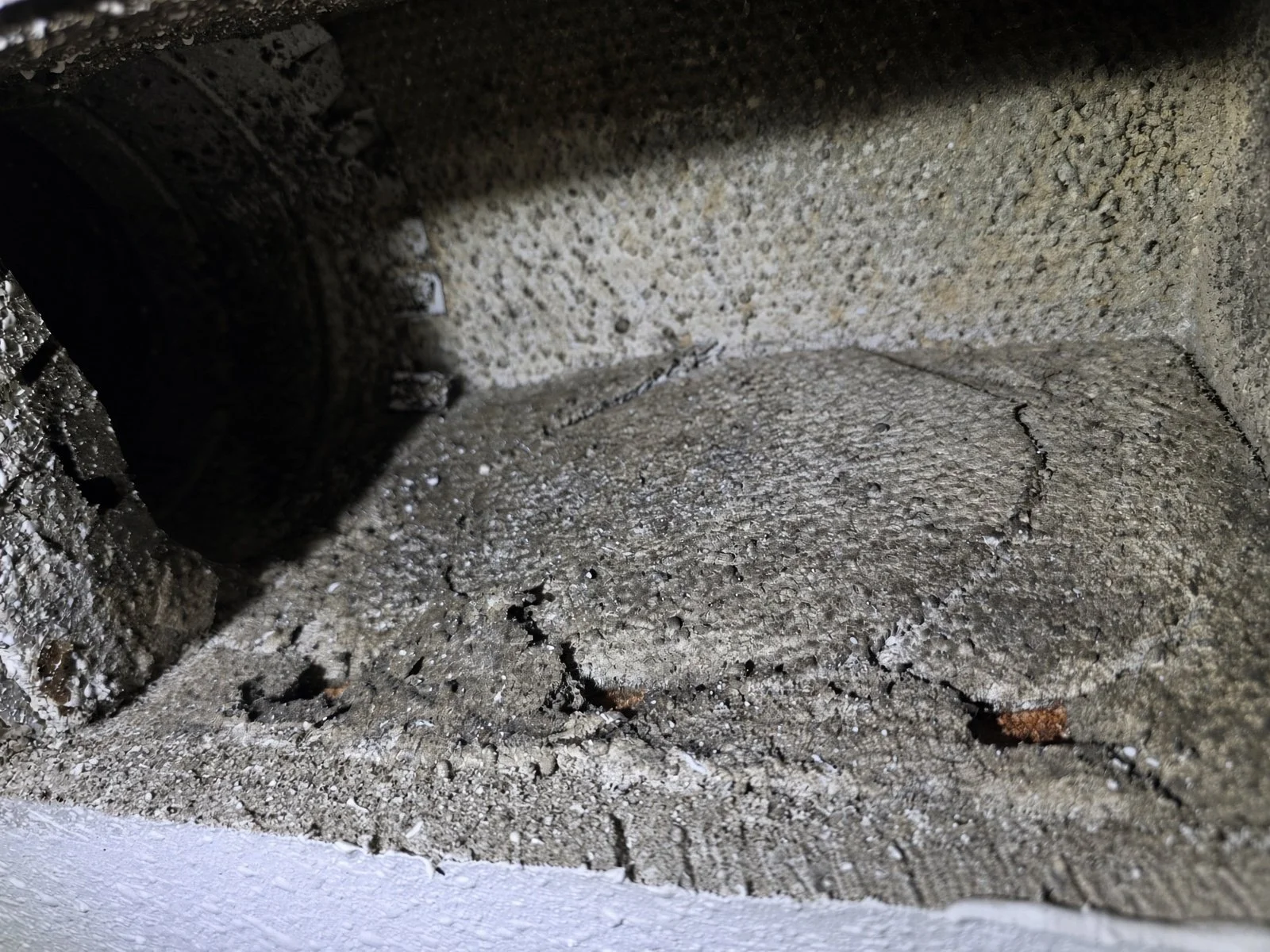
HVAC systems deserve particular attention during mold assessments because they move conditioned air throughout the home.
Depending on accessibility and conditions, we may evaluate areas including:
Air handling units
Return air cabinets
Supply plenums
Accessible duct interiors
Refrigerant lines
Condensate pans
Condensate drainage
Supply registers
Return registers
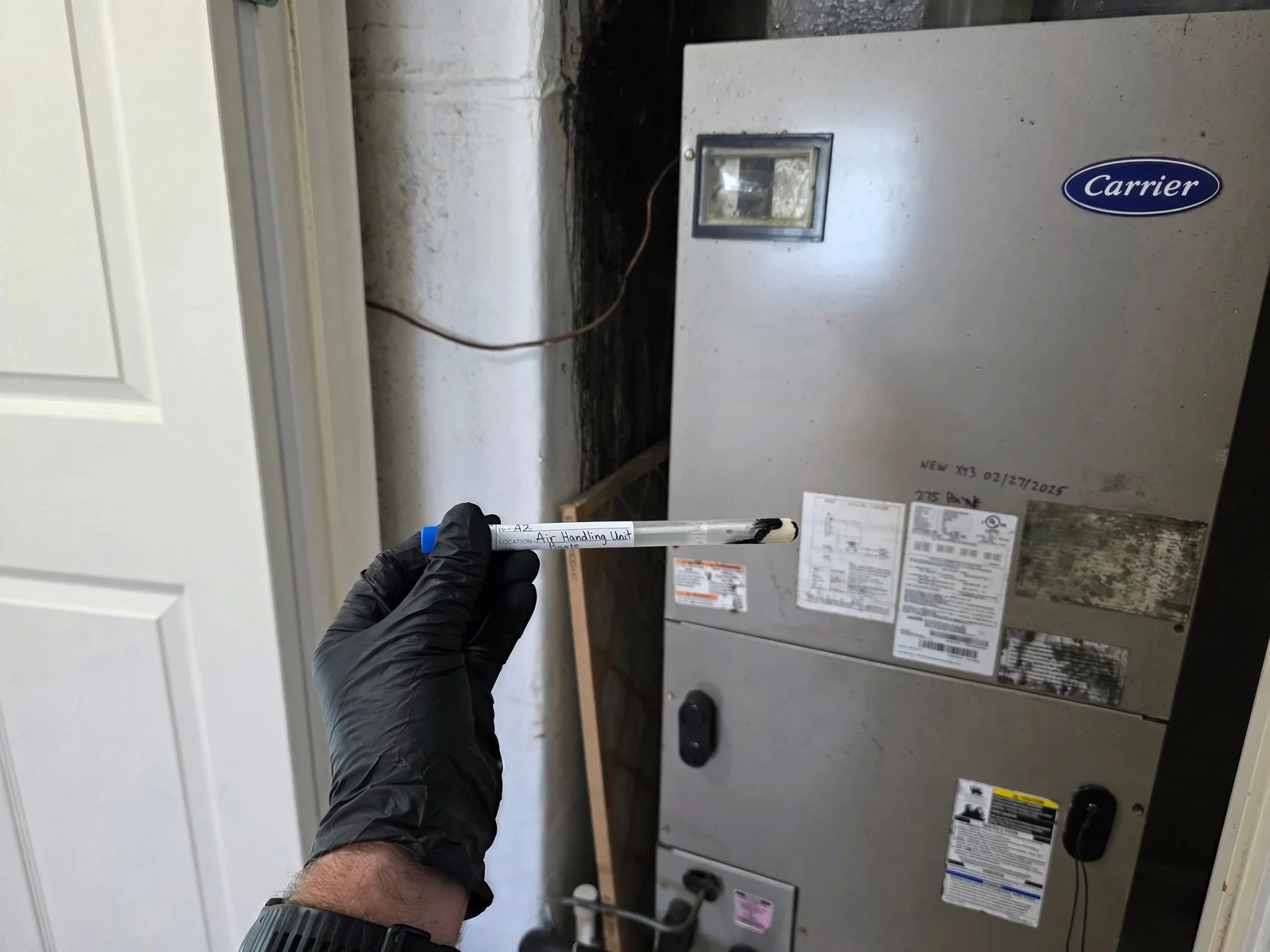
Suspected microbial growth within an HVAC system should be evaluated along with the moisture or condensation condition that allowed it to develop.
Simply cleaning visible growth without correcting the underlying moisture problem may not address the cause.
Mold Remediation Protocols
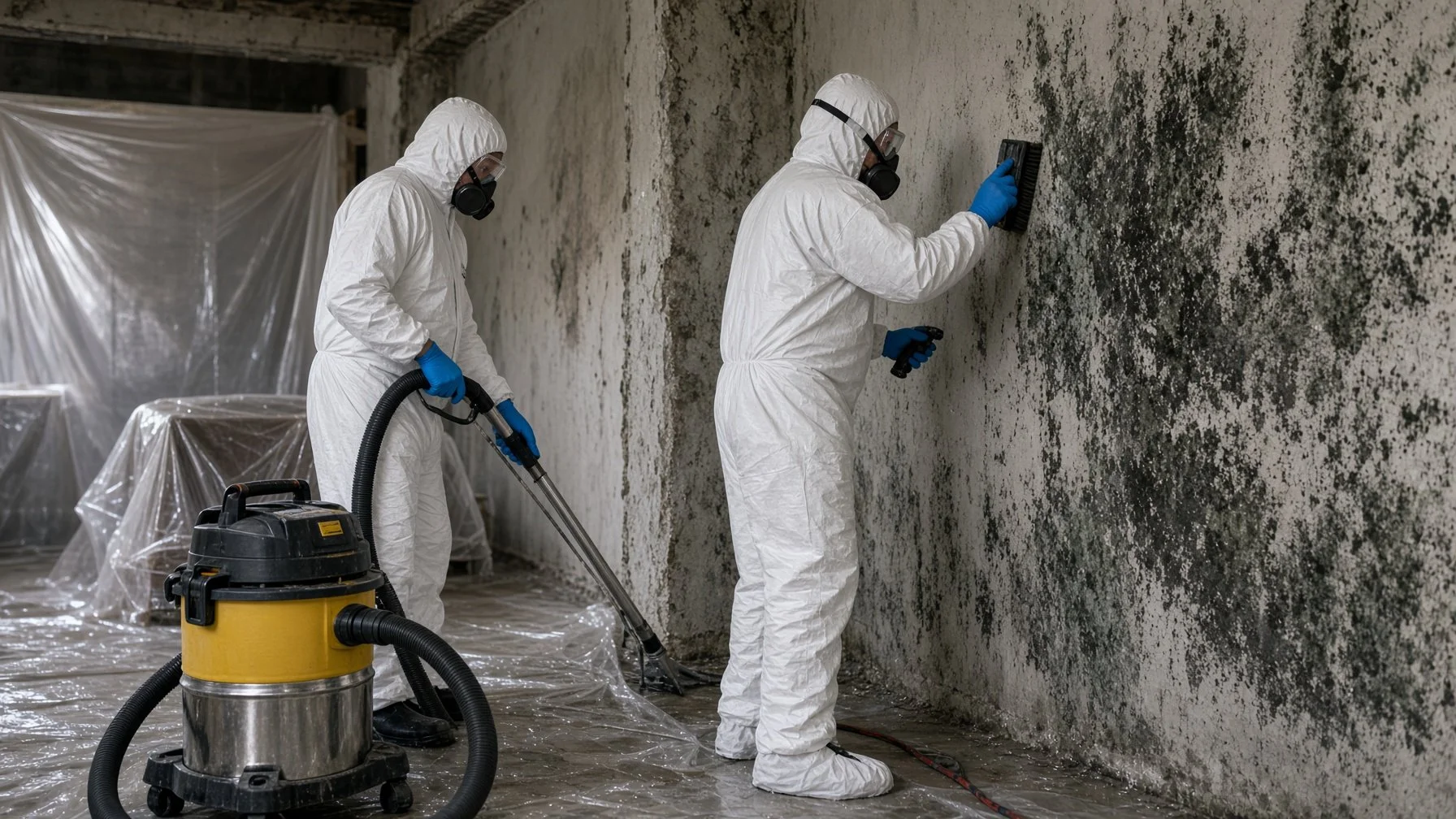
When professional remediation is warranted, a mold remediation protocol provides the remediation contractor with a defined scope of work based on the assessment findings.
Depending on the project, the protocol may address:
Areas requiring remediation
Materials affected
Approximate extent of contamination
Materials requiring removal or cleaning
Containment recommendations
HVAC considerations
Moisture-source corrections
Cleaning procedures
Post-remediation verification criteria
J. Gregory Home Inspections provides mold assessment and protocol services independently from the company performing the remediation.
This separation helps maintain an independent assessment of the property.
Post-Remediation Verification
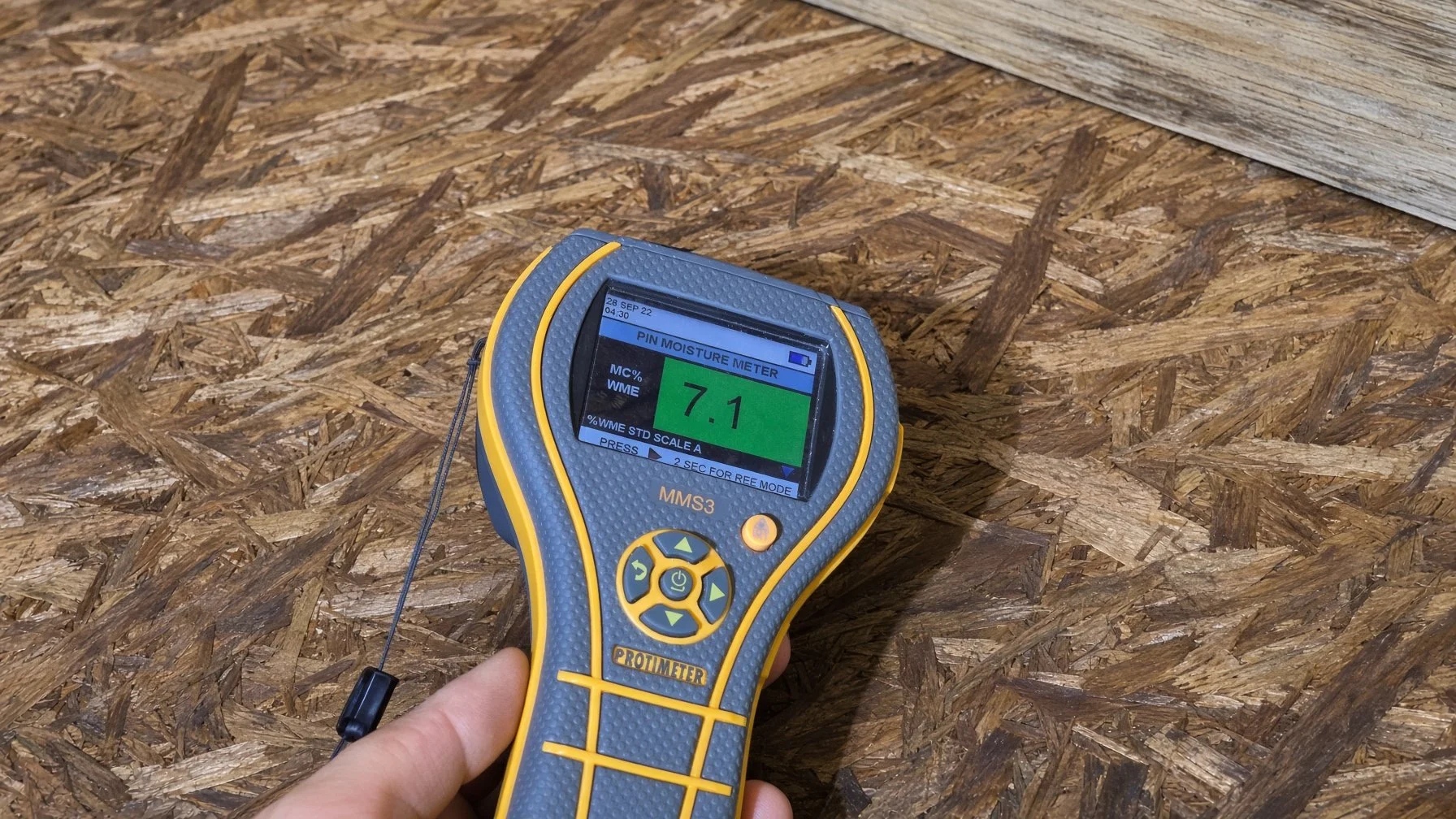
After mold remediation has been completed, post-remediation verification, sometimes called PRV or clearance testing, can help determine whether the remediation work has met the established verification criteria.
Depending on the project, PRV may include:
Visual evaluation of the remediated area
Verification that affected materials were addressed
Moisture evaluation
Evaluation for remaining visible debris or suspected growth
Air sampling when appropriate
Surface sampling when appropriate
Comparison with established protocol criteria
The purpose is to independently evaluate the remediated area after the remediation contractor has completed the work.
Why Independent Mold Assessment Matters
The company determining what needs to be remediated should be independent from the company financially benefiting from performing that remediation.
J. Gregory Home Inspections provides mold assessment services—we do not perform the mold remediation work.
This allows us to focus on evaluating the property, documenting the conditions found, and establishing appropriate recommendations without having a financial interest in how much remediation work is performed.
Buying a Home? Consider a Mold Assessment When Conditions Warrant It
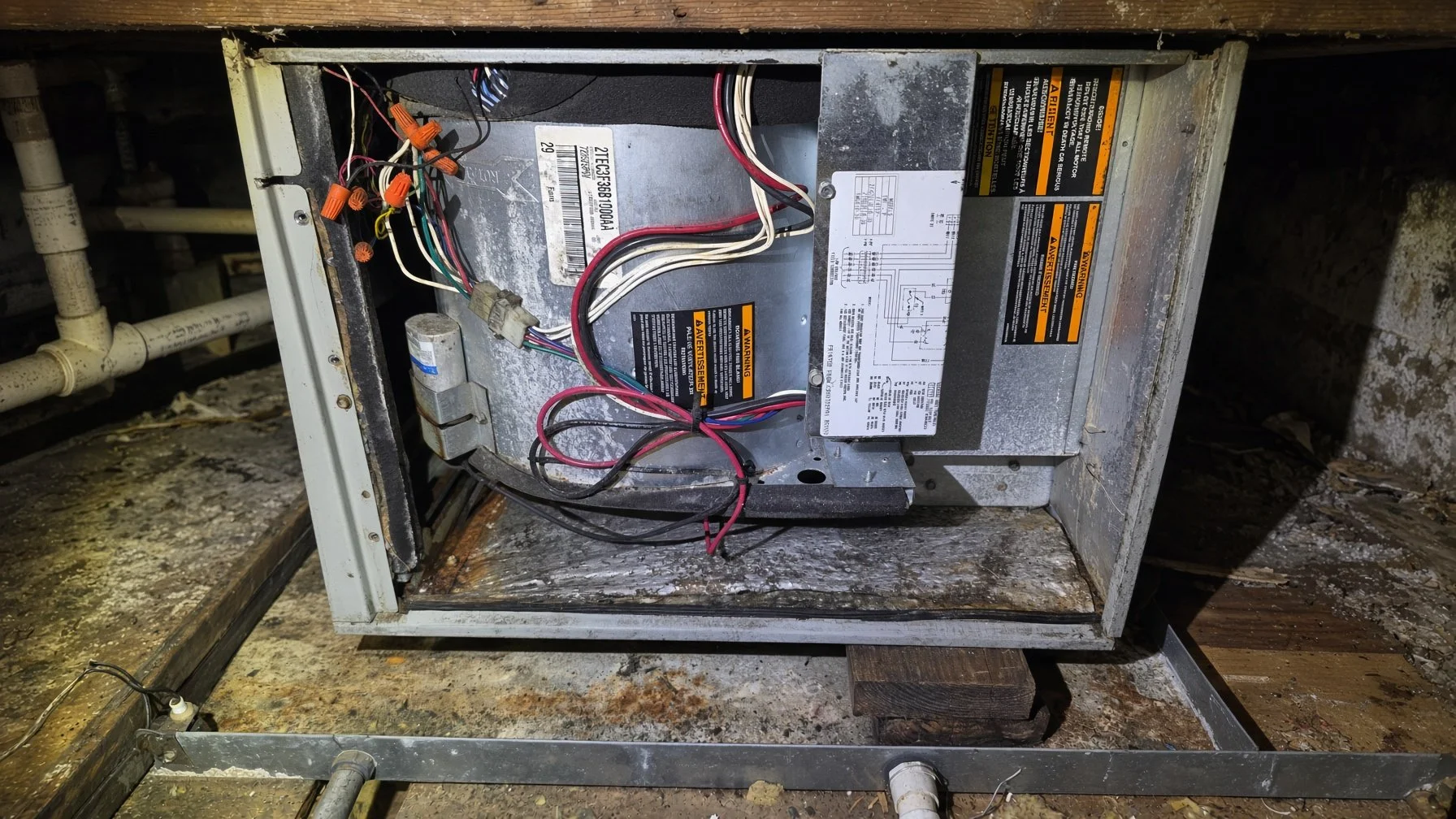
A standard home inspection is not the same as a comprehensive mold assessment.
During a home inspection, we may identify conditions such as:
Visible suspected microbial growth
Elevated moisture
Musty odors
HVAC contamination
Evidence of previous water intrusion
High indoor humidity
Water-damaged materials
When significant mold or moisture concerns are discovered, a separate mold assessment may be recommended.
For buyers, performing the assessment before closing may provide valuable information about the extent of the condition and whether professional remediation may be necessary.
Do All Mold Problems Require Whole-House Remediation?
No.
Mold and moisture conditions can vary significantly from one property to another.
Some problems may be confined to a relatively small area associated with a specific leak or condensation source.
Other situations may involve multiple rooms, HVAC components, attics, crawlspaces, or larger areas of water-damaged material.
Our goal is to base recommendations on the conditions actually observed and the supporting laboratory and moisture data, rather than assuming that every mold concern requires extensive remediation.
Why Choose J. Gregory Home Inspections for Your Mold Assessment?
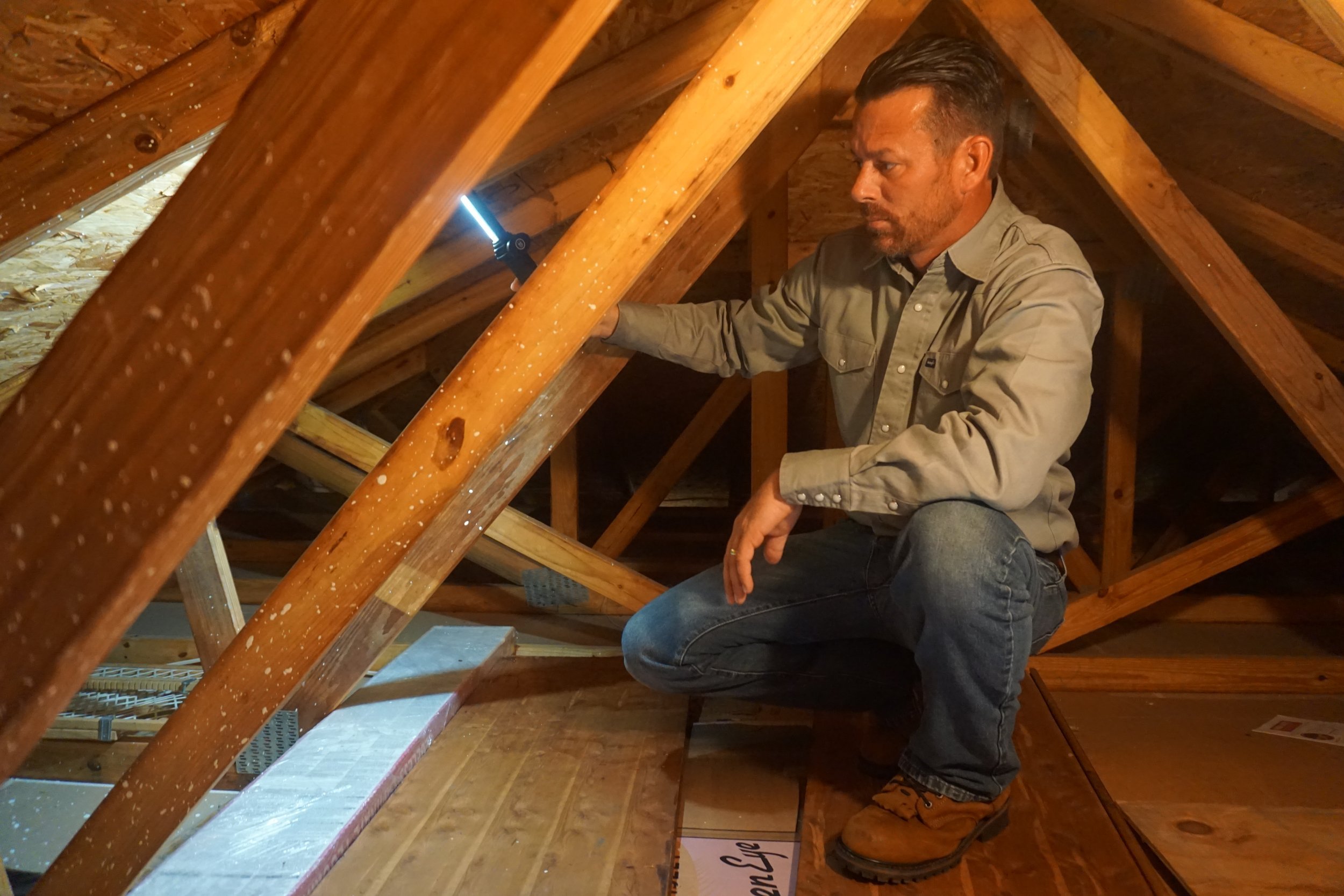
Florida Licensed Mold Assessor
Mold assessments are performed by Josh Gregory — Florida Mold Assessor License MRSA5499.
17+ Years of Construction Experience
Understanding building construction is extremely valuable when investigating where moisture may be entering or accumulating.
3,000+ Property Inspections Completed
Extensive inspection experience provides practical knowledge of roofing, HVAC, plumbing, building envelopes, attics, crawlspaces, and other systems commonly associated with moisture problems.
Advanced Inspection Equipment
Depending on conditions, we use professional equipment including:
Moisture meters
Infrared thermal imaging cameras
Hygrometers
Air sampling equipment
Borescope cameras
Independent Assessment
We perform mold assessments and remediation protocols but do not perform the mold remediation itself.
Direct Communication
You work directly with Josh throughout the assessment and reporting process, allowing you to ask questions about findings and recommendations.
Mold Assessment FAQs
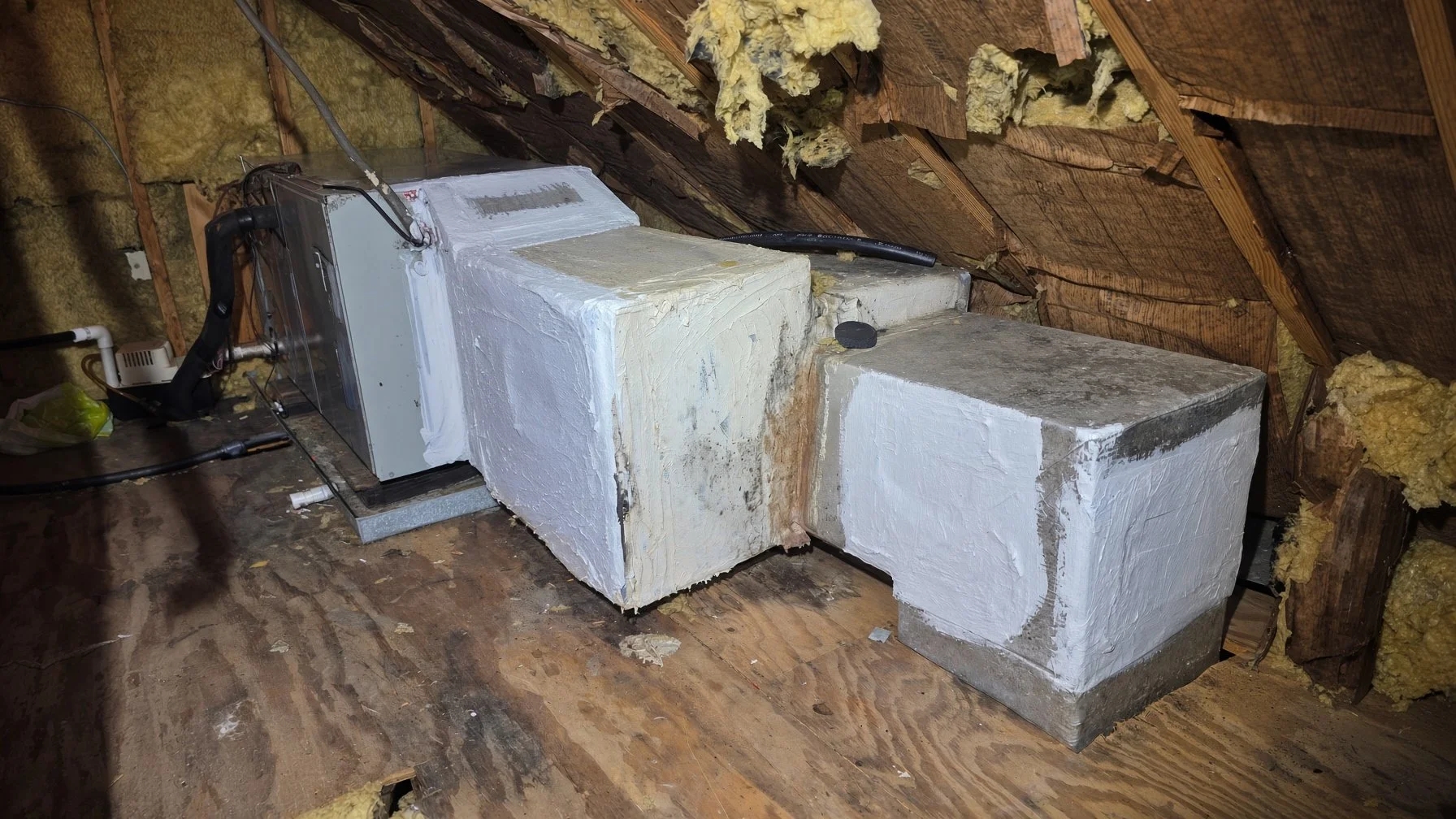
Do I need mold testing if I can already see mold?
Not necessarily in every situation.
Visible growth may already establish that a moisture-related condition needs to be addressed. However, sampling and a professional assessment can sometimes help establish the type and extent of fungal amplification, evaluate other areas of concern, and develop an appropriate remediation protocol.
Can you tell if mold is behind a wall?
No non-invasive inspection can guarantee that hidden mold will be discovered.
Moisture meters, thermal imaging, building history, odors, visible staining, and limited borescope evaluation may identify conditions that warrant further investigation, but concealed areas cannot always be evaluated without invasive access.
Does an air test tell me whether my house has mold?
Air sampling provides information about airborne fungal spores captured at the time and location of sampling.
Results should be interpreted together with visual observations, moisture conditions, building history, and other assessment findings.
Can you determine where the moisture is coming from?
Part of the assessment involves investigating potential moisture sources.
Depending on the situation, the source may involve roofing, plumbing, HVAC condensation, exterior water intrusion, indoor humidity, or another building condition.
Some situations may require additional evaluation by a roofer, HVAC contractor, plumber, engineer, or other specialist.
Do you perform mold remediation?
No.
J. Gregory Home Inspections performs mold assessment, sampling, remediation protocols, and post-remediation verification.
The remediation work itself should be completed by an appropriately qualified remediation contractor.
How long does a mold assessment take?
The time required depends on the size of the property, number of areas of concern, accessibility, and scope of sampling.
How long do laboratory results take?
Laboratory turnaround depends on the laboratory service selected and when samples are received. We will provide expected turnaround information when your assessment is scheduled.
Can you perform a mold assessment as part of a home purchase?
Yes.
Mold assessments are often performed when a buyer or home inspector discovers visible suspected mold, moisture intrusion, unusual odors, HVAC contamination, or other conditions that deserve further investigation.
Mold Assessments Throughout Northwest Florida
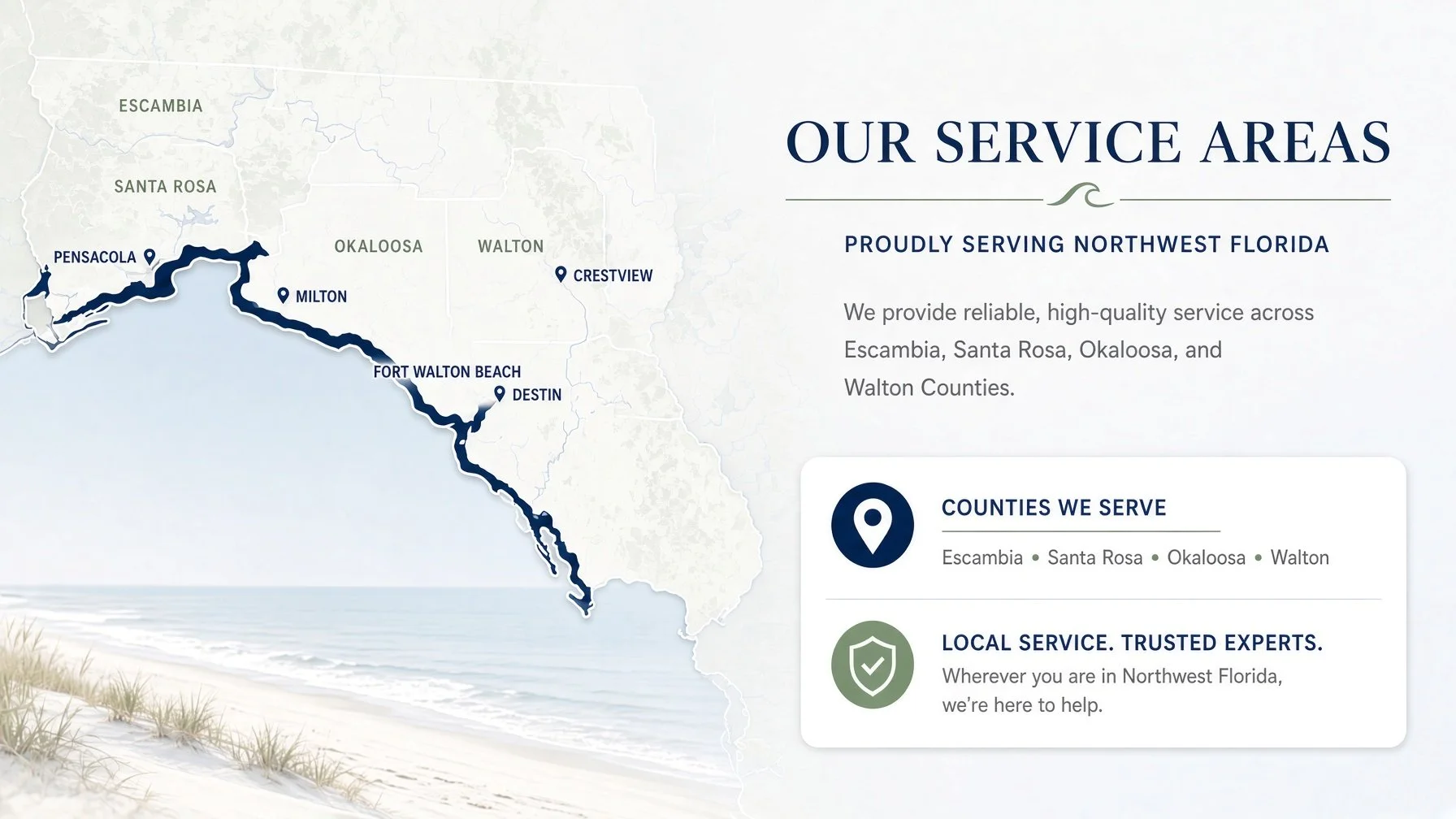
J. Gregory Home Inspections provides professional mold assessment services throughout:
Cantonment
Surrounding areas of Escambia, Santa Rosa, and Okaloosa Counties
Our experience with Northwest Florida homes gives us familiarity with the humidity, HVAC condensation, roof leakage, storm-related water intrusion, and coastal conditions commonly encountered throughout the Florida Panhandle and Emerald Coast.
Schedule a Mold Assessment
If you're concerned about visible mold, unusual odors, elevated humidity, water damage, HVAC contamination, or another moisture-related condition, a professional assessment can help determine what is happening and what steps may be appropriate.
J. Gregory Home Inspections
Josh Gregory
Florida Licensed Mold Assessor — MRSA5499
Florida Licensed Home Inspector — HI10393
Call or Text: 850-904-6955
Serving Pensacola, Navarre, Gulf Breeze, Destin, Fort Walton Beach, Pace, Milton, Crestview, Niceville, Miramar Beach, Cantonment, and surrounding Northwest Florida communities.