The Hidden Fire Hazard Lurking in Florida Homes: Why Old Federal Pacific Electrical Panels Are Dangerous and Why They Could Leave You Uninsurable
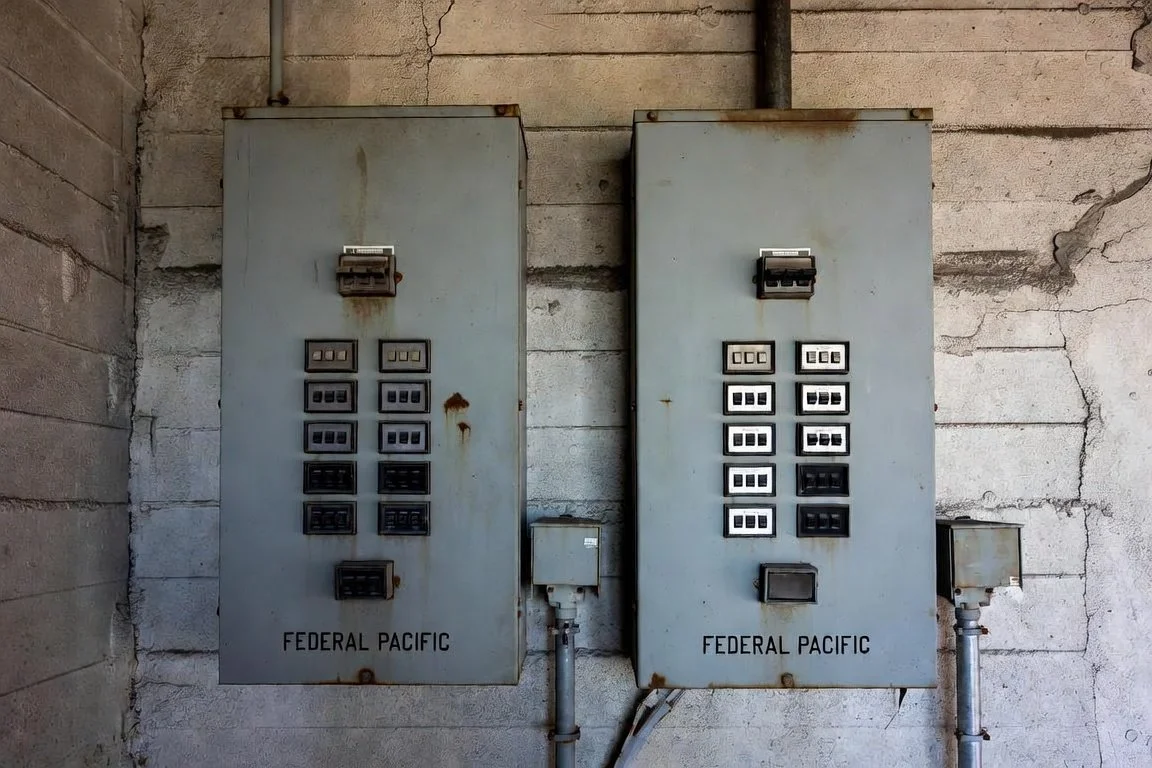
If your Florida home was built between the 1950s and the late 1980s, there’s a chance it still has an outdated electrical panel that could turn a minor overload into a house fire. Federal Pacific Electric (FPE) panels, particularly those with Stab-Lok circuit breakers, were installed in millions of American homes during that era. Today, they’re widely recognized by electricians, fire departments, and insurance companies as a serious safety risk.
In Florida’s already challenging insurance market, these panels can be a deal-breaker. Many carriers will deny coverage, cancel policies, or give homeowners just 30 days to replace them.
A Brief History of Federal Pacific Panels
Federal Pacific Electric manufactured these panels from the 1950s through the 1980s. They were popular because they were affordable and seemed reliable at the time. The signature feature was the “Stab-Lok” breaker design, which used a spring-loaded mechanism to connect to the bus bar.
What homeowners didn’t know then—and what investigations later revealed—is that the company allegedly falsified testing data to gain Underwriters Laboratories (UL) certification. Decades later, independent testing showed the breakers often failed to perform as designed.
Why These Panels Are So Dangerous
The core problem is simple but deadly: Stab-Lok breakers frequently fail to trip during an overload or short circuit.
When a breaker should cut power to prevent overheating, many FPE units stay closed.
This allows excessive current to flow through wires, causing them to overheat, melt insulation, arc, and ignite.
The failure can happen silently even after years of normal operation until one critical event triggers it.
Lab tests have shown failure rates ranging from about 25% to as high as 60%, depending on the specific breaker type and conditions. Independent research by electrical engineers, including Dr. Jesse Aronstein, has linked these panels to an estimated 2,000–2,800 residential fires per year nationwide, along with roughly 13 deaths and $40 million in property damage annually.
Fire departments across the country now issue warnings about them. Electricians recommend full panel replacement rather than swapping individual breakers, because the bus bars and connections can also become loose or corroded over time, creating additional points of failure.
Warning signs of potential electrical fire risk include burning plastic smells, fishy odors near the panel, flickering lights, or breakers that feel hot. If you notice any of these, treat it as an emergency and call a licensed electrician immediately.
How to Spot a Federal Pacific Panel in Your Home
Look inside your main breaker box (usually in the garage, laundry room, or exterior wall). You’ll see:
The brand name “Federal Pacific,” “FPE,” or “Stab-Lok” clearly printed on the panel cover or inside.
Breakers that often have distinctive red or orange stripes or markings.
Older-style breakers that say “Stab-Lok” on the handle.
The Insurance Nightmare in Florida
Florida homeowners already face high premiums and limited carrier options. An FPE panel can make things worse—fast.
Most major Florida insurers view these panels as an unacceptable fire risk. As a result:
New policies are often denied outright.
Existing policies may be canceled or given a short (often 30-day) window to replace the panel.
Four-point insurance inspections (common for older homes) almost always flag FPE panels, triggering the same requirements.
Some carriers, like Citizens Property Insurance, may still offer coverage in certain cases, but it’s usually more expensive and not a long-term solution. Replacing the panel not only restores insurability but can sometimes qualify you for lower premiums with private carriers once the work is completed and inspected.
What Should You Do?
Have it inspected by a licensed Florida electrician. Don’t try to diagnose or fix it yourself.
Get quotes for replacement. A typical 200-amp panel upgrade in Florida costs roughly $1,500–$4,500 (depending on home size, wiring condition, and whether service upgrades are needed). The work usually takes one to two days and requires a permit and final inspection.
Coordinate with your insurer. Notify them of your plans many will extend deadlines once work is scheduled.
Upgrade to modern standards. New panels from reputable brands (Square D, Siemens, Eaton, etc.) include arc-fault circuit interrupters (AFCI) and surge protection required by today’s National
The Insurance Nightmare in Florida
Florida homeowners already face high premiums and limited carrier options. An FPE panel can make things worse—fast.
Most major Florida insurers view these panels as an unacceptable fire risk. As a result:
New policies are often denied outright.
Existing policies may be canceled or given a short (often 30-day) window to replace the panel.
Four-point insurance inspections (common for older homes) almost always flag FPE panels, triggering the same requirements.
Some carriers, like Citizens Property Insurance, may still offer coverage in certain cases, but it’s usually more expensive and not a long-term solution. Replacing the panel not only restores insurability but can sometimes qualify you for lower premiums with private carriers once the work is completed and inspected.
What Should You Do?
Have it inspected by a licensed Florida electrician. Don’t try to diagnose or fix it yourself.
Get quotes for replacement. A typical 200-amp panel upgrade in Florida costs roughly $1,500–$4,500 (depending on home size, wiring condition, and whether service upgrades are needed). The work usually takes one to two days and requires a permit and final inspection.
Coordinate with your insurer. Notify them of your plans many will extend deadlines once work is scheduled.
Upgrade to modern standards. New panels from reputable brands (Square D, Siemens, Eaton, etc.) include arc-fault circuit interrupters (AFCI) and surge protection required by today’s National Electrical Code.
A modern, code-compliant electrical panel after upgrade. Safer, cleaner, and insurance-friendly.
Don’t Wait for a Crisis
Old Federal Pacific panels may have served your home quietly for decades but they represent a preventable fire risk that insurance companies refuse to underwrite. In a state where lightning storms, hurricanes, and aging housing stock already strain the electrical grid, the stakes are especially high.
If you’re buying, selling, or simply maintaining a Florida home, check your panel today. A relatively modest investment in replacement can protect your family, your property, and your ability to keep homeowners insurance at an affordable rate. Peace of mind is worth far more than the cost of an upgrade.
Stay safe and stay insured. Contact a licensed electrician for a professional evaluation if you suspect you have one of these panels.
If you’re looking for a home inspection or a mold assessment in the Pensacola, Navarre, Destin and Fort Walton Beach areas, reach out to J. Gregory Home Inspection today! Call us: 850-904-6955 or visit our website: jgregoryinspections.com